
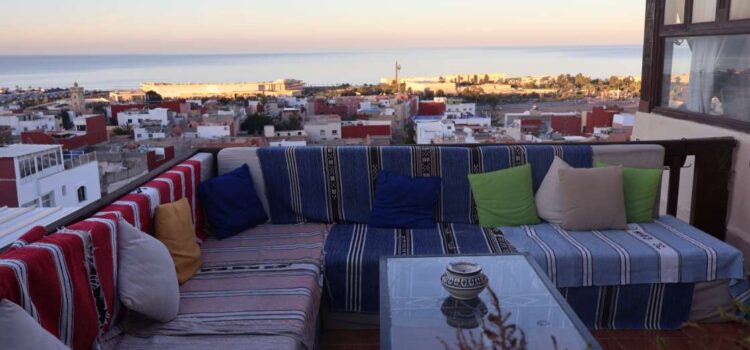
Introduction of Moroccan Hospitality
Moroccan hospitality is often felt from the very first moments in the country. At Original Surf Morocco this welcome is shared through simple gestures. Before discovering the landscapes or tasting the food, visitors notice the people. A simple greeting, a sincere smile, or an offered cup of tea immediately creates comfort. Even without sharing a common language, connection feels easy.
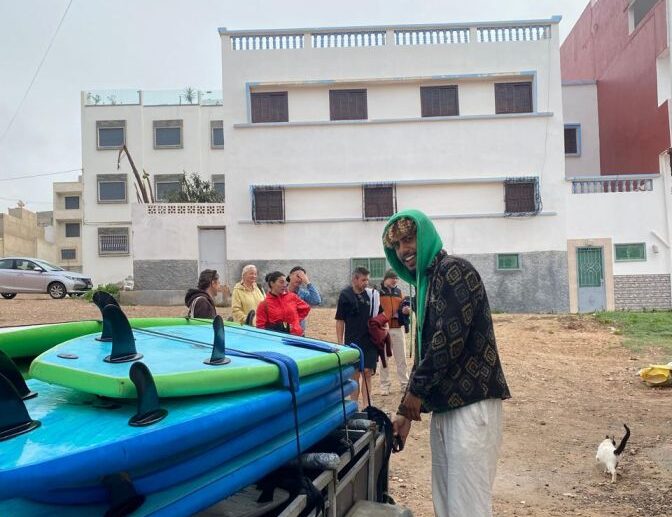
Hospitality here is not planned or performed. It flows naturally through daily life. guests are welcoming without hesitation and without conditions. They are invited to sit, to eat, and to feel at ease. This warmth does not belong only to homes or riads. It appears in the streets, markets, and small everyday interactions.
What surprises many visitors is how quickly this sense of belonging forms. Moroccans hospitality is deeply rooted in culture and tradition. It is shaped by values of generosity, respect, and care for others.
Through simple gestures and genuine attention, strangers become familiar. And it is this human connection that makes guests feel at home so quickly in Morocco.
Join our surf family in Tamraght from here
1- What Makes Moroccan Hospitality Unique
1-1Moroccan Hospitality as a Deep-Rooted Cultural Value
In Morocco, hospitality is not something learned later in life, it begins in childhood and grows through daily experience. Children watch their parents prepare the house for guests, offer the best seat, and share what they have without hesitation.
Through these moments, hospitality becomes a natural behavior rather than a rule to follow. Even in modest homes, visitors are welcomed with pride and care because generosity is closely tied to dignity and self respect.
This value is deeply rooted in tradition and reinforced by cultural and religious beliefs, which view sharing as a source of blessing. As a result hospitality is not performed or exaggerated, it feels sincere, spontaneous, and deeply human.
1-2 Moroccan Hospitality: Welcoming Guests as a Social and Moral Responsibility
Welcoming a guest in Morocco goes beyond good manners and enters the realm of moral responsibility. From the moment someone arrives the host feels accountable for their comfort, safety, and peace of mind.
This responsibility is often shared by the entire household, where routines adapt naturally to the guest’s presence. Comfort is prioritized over convenience, and care is offered without calculation.
Hosts rarely question whether it is the right time or the right moment, instead, they focus on making the guest feel respected and valued. This sense of duty removes hesitation and transforms hospitality into an act guided by belief, tradition, and social conscience.
2- The First Moments that Make Guests Feel at Home
2-1 Warm Greeting and Genuine Smiles
The first moments of arrival in Morocco are rarely rushed or distant. Guests are greeted with calm attention, warm words and genuine smiles that immediately reduce any sense of unfamiliarity.
Simple question abut the journey are asked with sincere interest, creating an atmosphere of care rather than formality. These early interactions set the tone for everything that follows, allowing visitors to feel acknowledged rather than evaluated.
Even brief encounters carry warmth, showing that connection matters more than language or background. Form these first seconds, comfort begins to settle naturally.
2-2 Treating Guests Like Family not Visitors
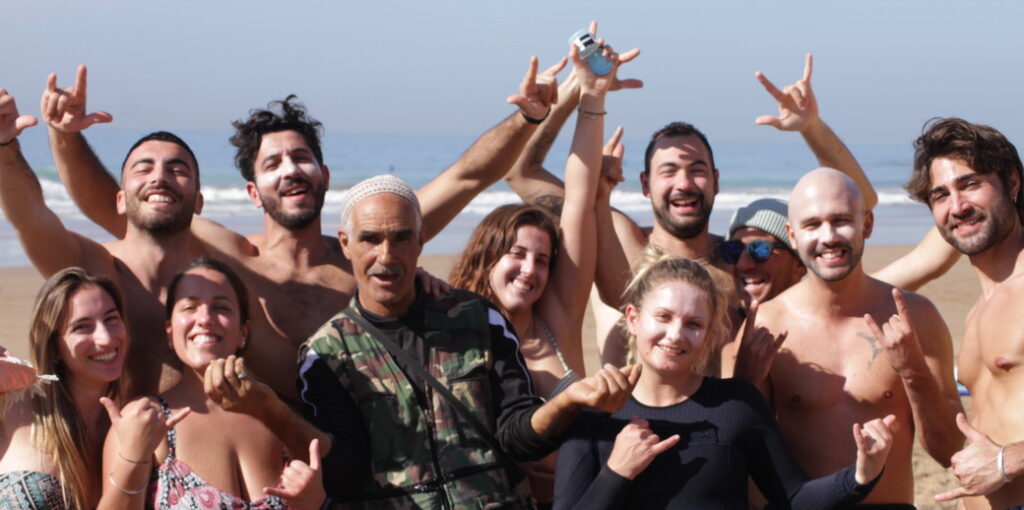
Soon after arriving, many guests notice a shift in how they are treated. They are not longer seen as visitors but as a part of the household’s daily life. Meals are shared casually, conversations flow without pressure, and guests are encouraged to relax as if they belong. Phrases like “this is your home” are supported by genuine actions, not empty words. Boundaries soften, formality disappears, and closeness replaces distance. This treatment creates emotional ease and transforms visits into shared experiences built on trust and familiarity.
3- The Role of Food and Tea in Morocco Hospitality
3-1 Sharing Meals as an Act of Generosity
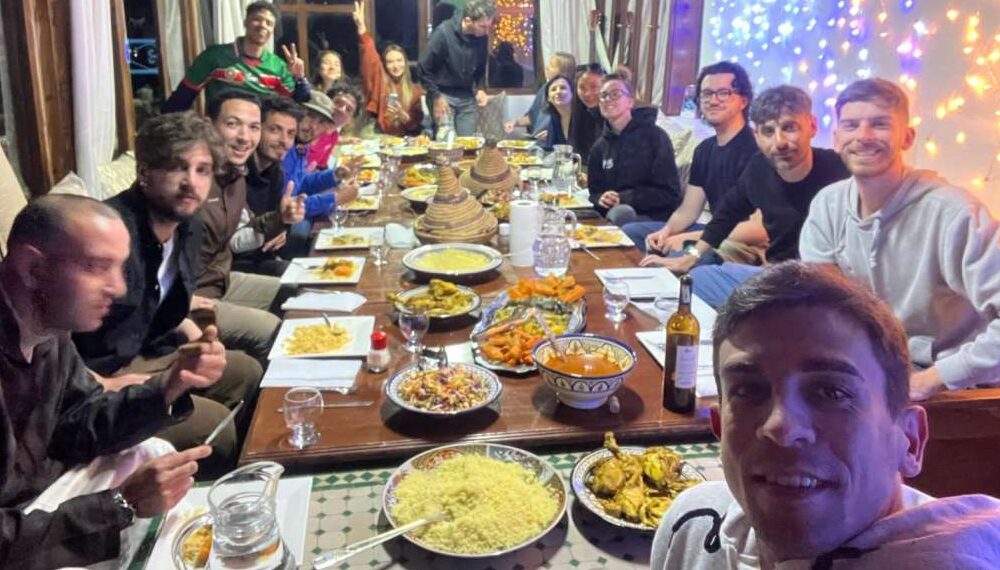
Food is one of the strongest expressions of hospitality in Moroccan culture. Guests are almost always invited to eat, whether their visit was planned or unexpected. Meals are shared from the same dishes, creating a sense of equality and closeness around the table.
Hosts often insist that guests eat first, seeing this gesture as a sign of respect and care. time slows during meals, allowing conversations to unfold naturally and laughter to fill the space. In this context, food becomes more than nourishment, it becomes a language of generosity and connection.
3-2 Tea as a Symbol of Welcome and Respect
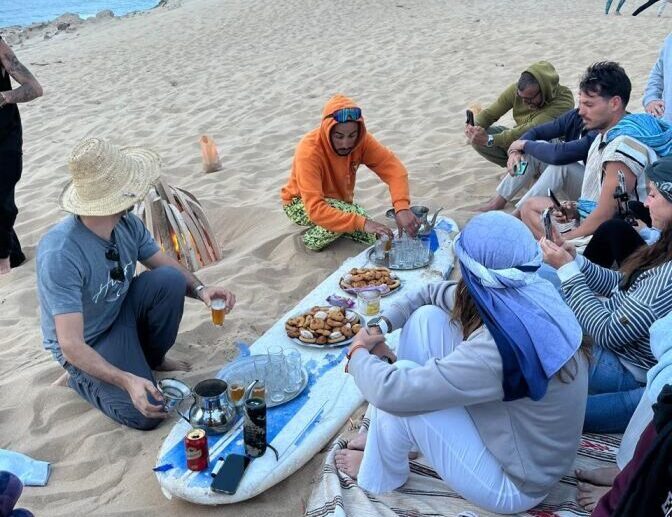
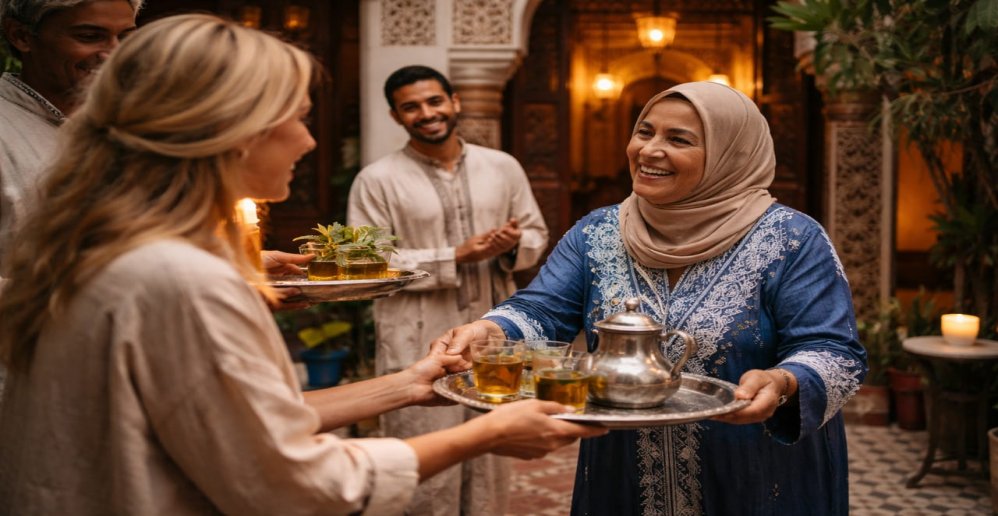
Mint tea holds a special place in Moroccan Hospitality, often marking the true beginning of a guest’s welcome. Its preparation is unhurried and intentional, reflecting respect for the person being served.

As glasses are poured and refilled, conversation flows easily, creating a calm and inviting atmosphere. tea signals openness and safely, gently encouraging guests to stay, relax, and connect. More than a drink it is a symbol of peace, respect, and shared presence that softens strangers and strengthens bonds.
4- Every Gestures that Create Instant Comfort
4-1 Kindness Through Small Actions
Hospitality in Morocco often reveals itself in unexpected, everyday moments. A stranger may notice confusion and step in to help, turning simple directions into a short walk together.
Advice is offered patiently, and smiles often replace shared language. These gestures are brief but powerful, reassuring visitors that they are not alone. Because they are spontaneous and unforced, they leave a deep impression and quietly build trust. Through such simple actions, comfort grows naturally and effortlessly.
4-2 Generosity Without Expectation
One of the most striking aspects of Moroccan hospitality is generosity without expectation. Help is offered freely, without the anticipation of reward or return.
Time, effort, and attention are giving openly, surprising many visitors who are unused to such selfless gestures. No one keeps count or creates obligation, kindness exists simply for its own sake.
This absence of pressure creates emotional ease and deep respect, allowing generosity to feel sincere, pure and deeply human.
5- Moroccan Hospitality beyond homes and riads
5-1 Help From Strangers in Daily life
Moroccan hospitality extend far beyond private homes and traditional riads. In markets, streets, and public spaces, strangers often offer guidance and support without being asked.
shopkeepers share advice with pride, taxi drivers recommend places warmly, and passersby take time to assist lost travelers. language barriers rarely stand in the way, as gestures and smiles bridge the gap.
This everyday support helps visitors feel safe and confident, turning unfamiliar surroundings into welcoming spaces.
5-2 A Culture of Care in Public Spaces
Public life in Morocco reflects a shared sense of care and responsibility. Markets feel lively yet personal, and interactions are often marked by respect and attentiveness.
Elders and guests receive special consideration, while courtesy appears naturally in daily exchanges. Even in crowded environment, people look out for one another, creating a strong sense of community.
This collective warmth helps visitors feel included rather than invisible, reinforcing the idea that hospitality is not limited to individuals bit is a shared cultural identity.
6- Why Guests Feel at Home so Fast in Morocco
6-1 Moroccan Hospitality as Emotional Warmth and Human Connection
One of the strongest reasons that makes guests feel at home so quickly is the emotional warmth found in everyday interactions. People connect with sincerity rather than formality, and conversations often begin with genuine interest instead of polite distance.
Smiles laughter, and shared moments appear naturally, allowing visitors to feel emotionally welcomed rather than simply received. This openness creates trust even between strangers and helps overcome cultural or linguistic barriers.
Guests are treated as individuals, not as passing tourists, which makes each interaction feel personal and meaningful. over time, these sincere connections create familiarity, transforming a visit into a true sense of belonging.
6-2 Moroccan Hospitality and Leaving with More Than Just Memories
When guests leave, they often realize they are carrying more than photographs or travel stories. What remains are faces, voices, and moments of kindness that shaped the experience.
Hospitality builds emotional bonds that last long after the journey ends, turning short visits into lasting impressions. Many visitors remember the feeling of being cared for and genuinely welcomed, even in unfamiliar places.
This emotional attachment explains why so many people feel drawn back, not only for revisit locations but to reconnect with the warmth they once experienced. In this way, hospitality turns travel into a deeply human and unforgettable journey.
Conclusion About Moroccan Hospitality
Moroccan Hospitality is not something visitors simply observe during their stay, it is something they feel deeply and carry with them long after the journey ends.
The memories of kindness of kindness remain are not only of beautiful places, but of people, shared moments, and genuine acts of kindness that leave a lasting impression.
A cup of tea offered without hesitation, a warm smile from a stranger, or unexpected help in an unfamiliar place quietly stays in the heart and shapes the experience. These moments create a strong sense of belonging, transforming a destination into something familiar and comforting.
Hospitality in Morocco goes far beyond service or tradition, as it represents a sincere expression of human connection and care. This is why guests feel at home so quickly, never treated as outsiders passing through, but welcomed as part of a shared story.
And when they finally leave, they take more than memories with them, they carry a lasting feeling of home that never truly fades.
Come surf, eat, and connect with us Here