

INTRODUCTION TO SURF TIPS FOR BEGINNERS

If you’re new to surfing, welcome to the ride of your life! The ocean is an incredible place to learn, grow, and have fun—but let’s be honest: starting out isn’t always smooth sailing. And everyone makes mistakes but we are here to help along the way, and provide important surf tips for beginners.
Most beginner surfers make a few common mistakes in their first few sessions. And that’s alright.
The good news? Every mistake is part of the journey—and completely fixable.
Whether you’re getting ready for your first surf holiday or just want to improve your technique, here are five essential surfing tips for beginners to help you progress faster and stay safe in the water.
1. POPPING UP TOO SLOWLY OR TOO LATE
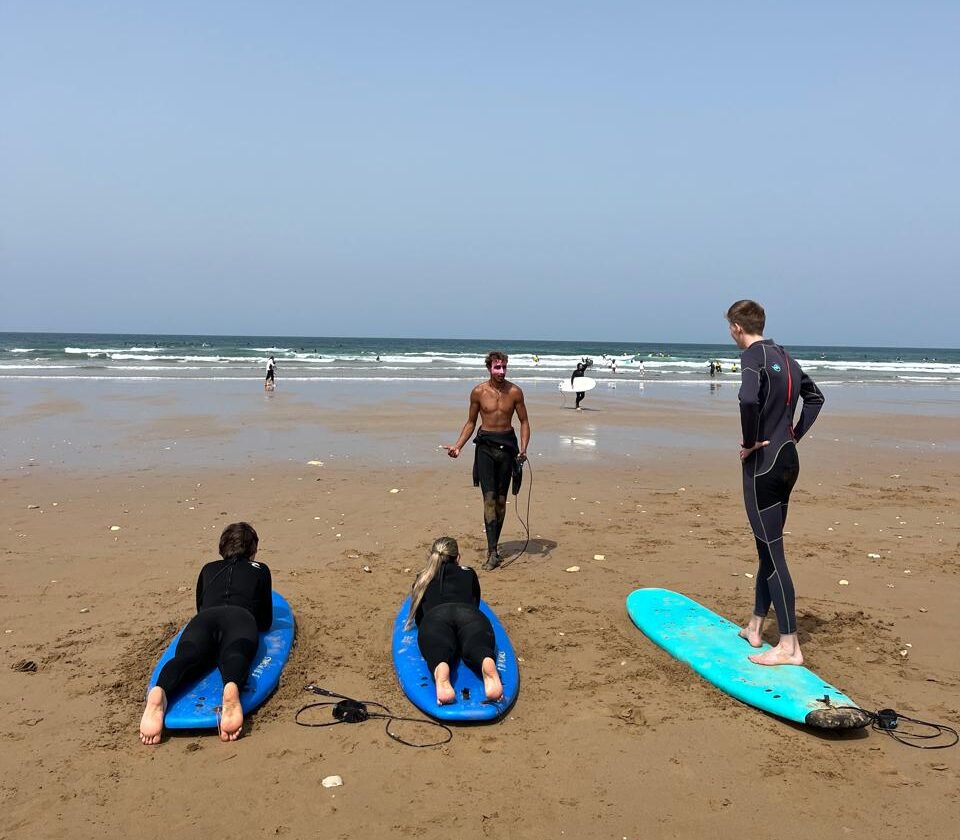
Popping up on the board appropriately is detrimental to riding the wave correctly. The proper technique greatly eases catching waves. So, the first thing that any beginner surfer should master is popping up, as it is an essential skill for surfing.
One of the most common mistakes beginners make is hesitating during the pop-up. If you take too long to stand up, the wave passes you by—or worse, you wipe out.
Tip: Practice your take-off on land until it becomes second nature. Use your core and arms to push up quickly in one fluid motion. The faster and more confidently you move, the better your chances of riding that wave.
If you’re surfing with us, pay close attention to the surf coaches when practicing the pop-up and listen carefully to their instructions, especially about popping up.
In our YouTube channel, we demonstrated how to pop up on the board properly. It puts our words into visuals.
2. STANDING IN THE WRONG POSITION ON THE BOARD
If you got your popping up under control, the next thing that comes after is standing on the board. Standing on the board correctly can make or break the surf.
If you’re too far forward, the nose dips. Too far back, and the board stalls. Finding the sweet spot is key to balance and control.
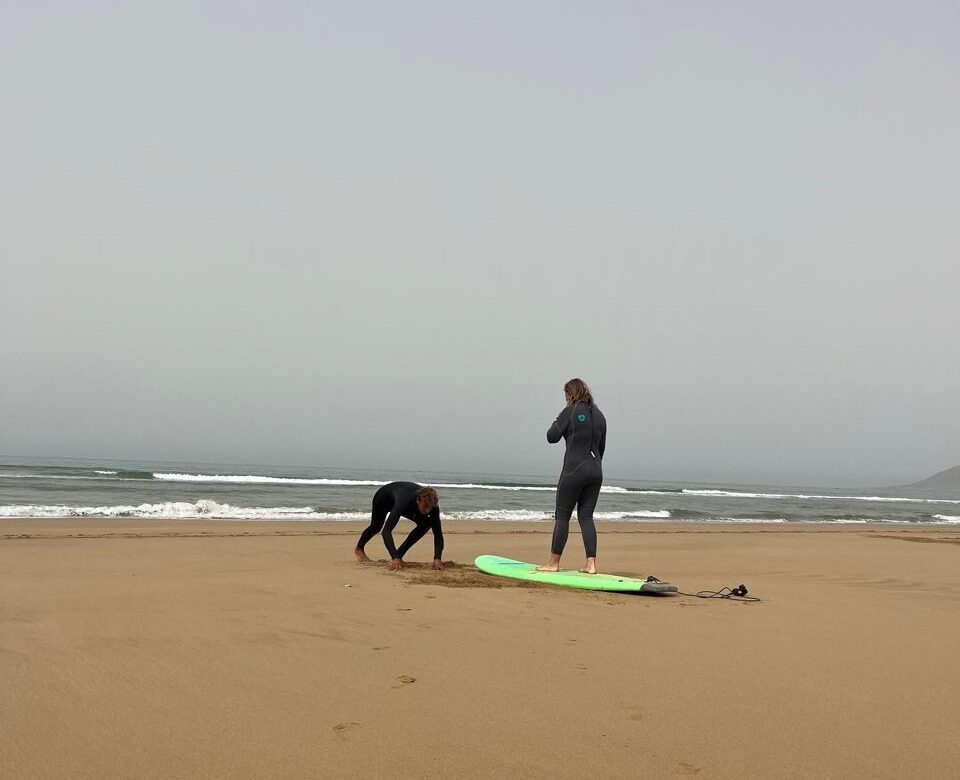
Tip: Your feet should land just over the center of the board during your pop-up. Practice with an instructor who can give you feedback, or use wax marks on your board to guide your foot placement.
Planting your feet on the centre of the board where your arms were when popping up and and angling your feet 45 degrees gives a strong base to surf the waves. Also, standing on the board properly make you able to manoeuvre where you want to ride with your core.
Want hands-on help with these tips? Join our surf camp!
3. LOOKING DOWN INSTEAD OF AHEAD
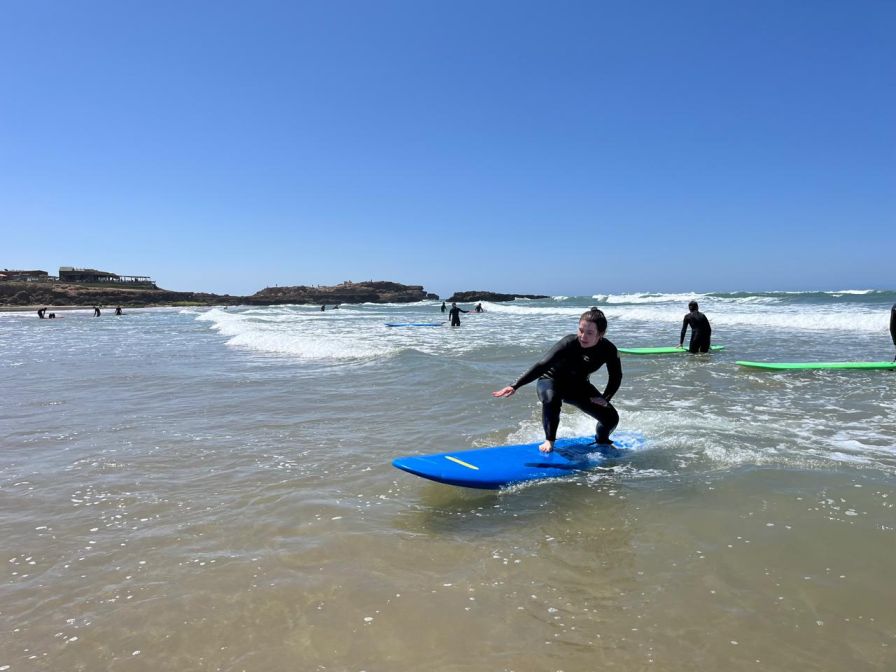
It’s natural to glance down at your feet or the nose of your board, but doing so disrupts your balance and direction.
After standing on the board the first thing that comes to mind is to check your feet placement. However, looking down may cause you to lose your balance and fall.
Tip: Always look where you want to go. Keep your chin up, your eyes forward, and your weight centered. This one small adjustment can improve your surfing instantly. All extreme athletes say that surfing just like skating you have to observe your path. This trick will keep your feet on the board and you will feel that the latter is moving following your eyes.
4. CHOOSE THE RIGHT WAVES
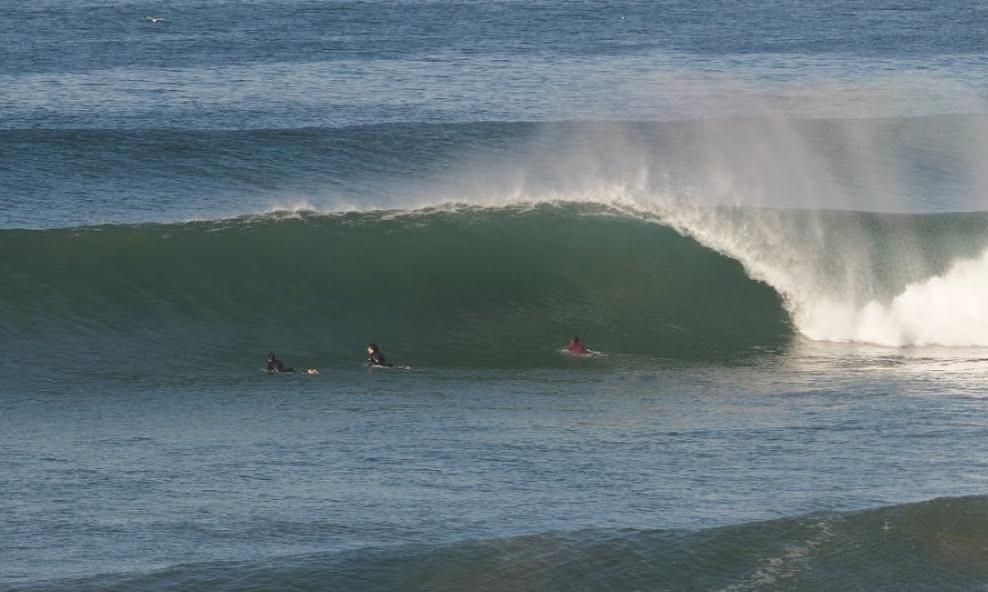
Many beginners either paddle for every wave or wait too long for the “perfect” one. Either way, they miss valuable practice time. One of the most common novice surfers complain about especially the ones who are staying with us in the surf camp, is that they lack the adequate skills to choose the right wave based on their level to ride. It is very important to listen to surf instructors when they inform you about which wave is suitable for you.
Tip: Watch the waves before paddling out. Look for smooth, rolling waves that break consistently and aren’t too steep. Surf camps and local instructors can help you understand which waves are best for your level.
5. SKIPPING THE WARM-UP & SURF ETIQUETTE
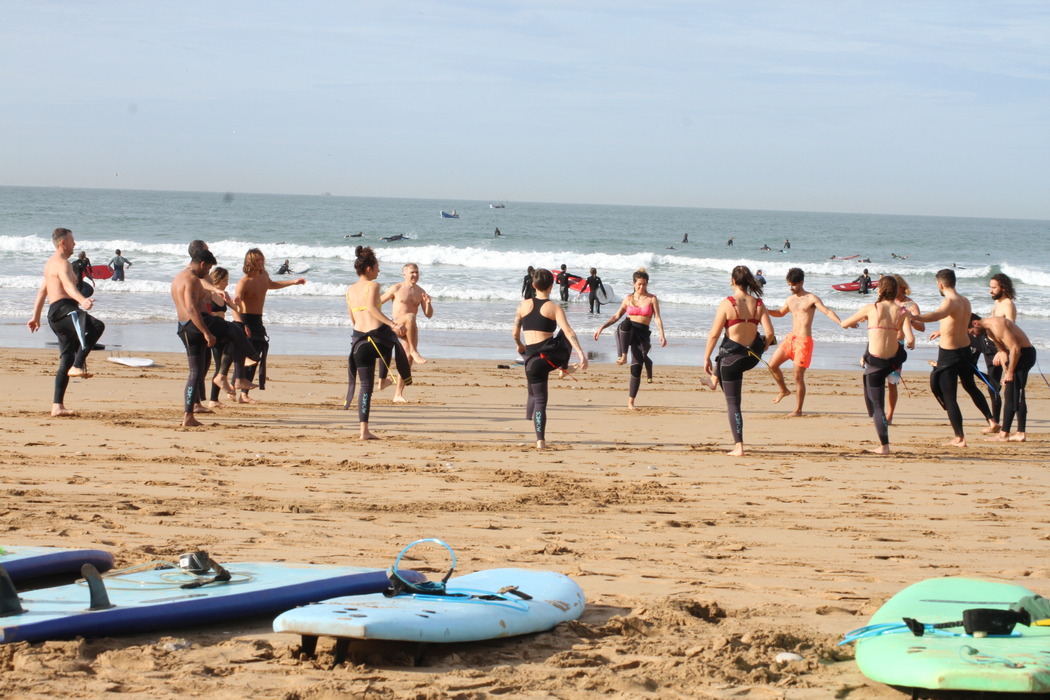
Heading straight into the water without warming up or learning basic surf rules can lead to injuries or frustrating sessions. As for any sports, warming up is essential to prevent injuries that may happen.
Tip: Stretch, jog, and warm up your shoulders before paddling out. Learn key etiquette like not dropping in on others, keeping your board under control, and staying aware of your surroundings.
So before you hit the waters, it’s really good idea to warm up and let your blood circulate. Also you should learn about surf etiquette, as well as, local surf culture.
FINAL THOUGHTS ON SURF TIPS FOR BEGINNERS: PROGRESS, NOT PERFECTION
Learning to surf is all about showing up, having fun, and improving little by little. Mistakes are part of the process—but with the right mindset and these surf tips for beginners, you’ll be catching green waves in no time.
At Original Surf Morocco, we specialize in helping beginner surfers build confidence from day one. With daily coaching, guided sessions, and a supportive community, we make sure you learn fast, have fun, and fall in love with surfing.
Ready to start your surf journey?
Join us in Tamraght for the ultimate beginner surf holiday in Morocco.
FAQ ON SURF TIPS FOR BEGINNERS
What is the first trick to learn surfing?
The first “trick” every beginner should learn is how to pop up on the board — the movement from lying down to standing on your feet. Mastering the pop-up on land builds muscle memory, making it easier to do it in the water. It’s the foundation of every ride.
How to start surfing as a beginner?
Start by taking a surf lesson with a certified instructor. They’ll teach you ocean safety, paddling technique, board positioning, and how to pop up. Begin with a soft-top surfboard on a sandy beach with small waves. Most importantly, start slow, be patient with yourself, and enjoy the process.
Is surfing hard for beginners?
Yes — at first! Surfing challenges your balance, timing, strength, and patience. The hardest part is often just learning to read waves and pop up consistently. But with the right mindset, proper instruction, and regular practice, it becomes incredibly rewarding and fun.
Is 20 too old to start surfing?
Not at all! 20 is a great age to start. Many people start surfing well into their 30s, 40s, or even later. Surfing is more about consistency and attitude than age — if you’re healthy and motivated, you’re never too old to start riding waves.
What are the best surf tips for beginners?
If you’re new to surfing, here are some essential tips to help you get started safely and confidently:
-
Take a lesson – A qualified surf instructor will teach you the basics, help you understand ocean safety, and correct your form early on.
-
Start on a soft-top board – Bigger, foam boards offer better stability and are ideal for learning.
-
Practice your pop-up on land – Rehearse getting from lying down to standing before hitting the waves.
-
Learn to read the ocean – Understanding wave patterns, currents, and tides is key to both safety and progression.
-
Always warm up – Stretch and move your body before you paddle out to prevent injury.