
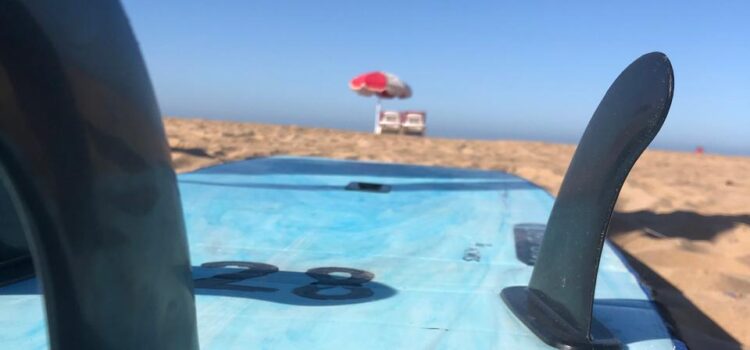
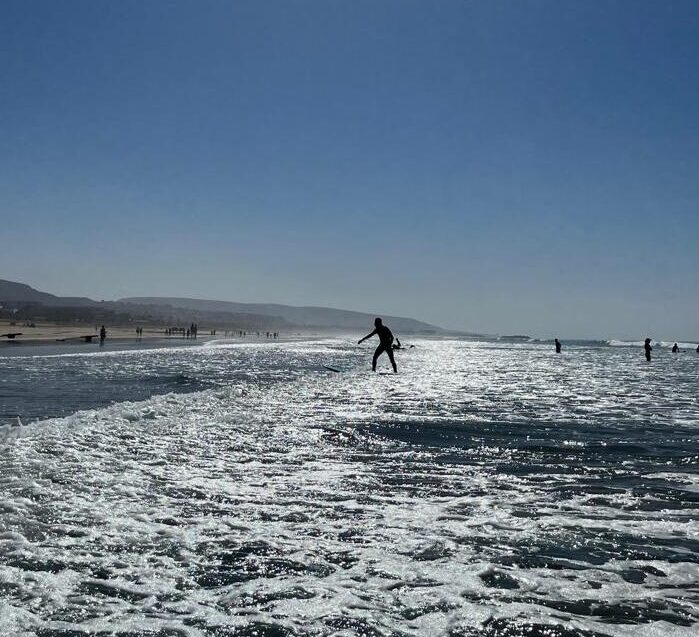
This is the story of my first time surfing, an experience that unfolded right here in my hometown of Agadir, at Panorama Beach—very close to Morocco’s surf mecca, Taghazout. This particular beach break was the perfect spot for beginners, thanks to its slow, forgiving waves and the spacious sandbanks left behind by the low tide, providing ample room to set up and practice.

As someone who handles marketing for a surf camp, I’ve spent a lot of time promoting the magic of surfing. But on this day, I stepped into the shoes of our guests—experiencing the thrill, the struggle, and the stoke first-hand. I wanted to fully understand what it feels like to start from zero, just like many of our visitors who travel from all over to learn to surf with us.
Experiencing First Time Surfing as a Guest at Original Surf Morocco
Every surf trip at Original Surf Morocco starts with a few essentials: finding the right wetsuit and selecting a surfboard based on skill level. As a complete beginner, I was given a soft-top board, which is wider and more buoyant, making it easier to balance and catch waves.
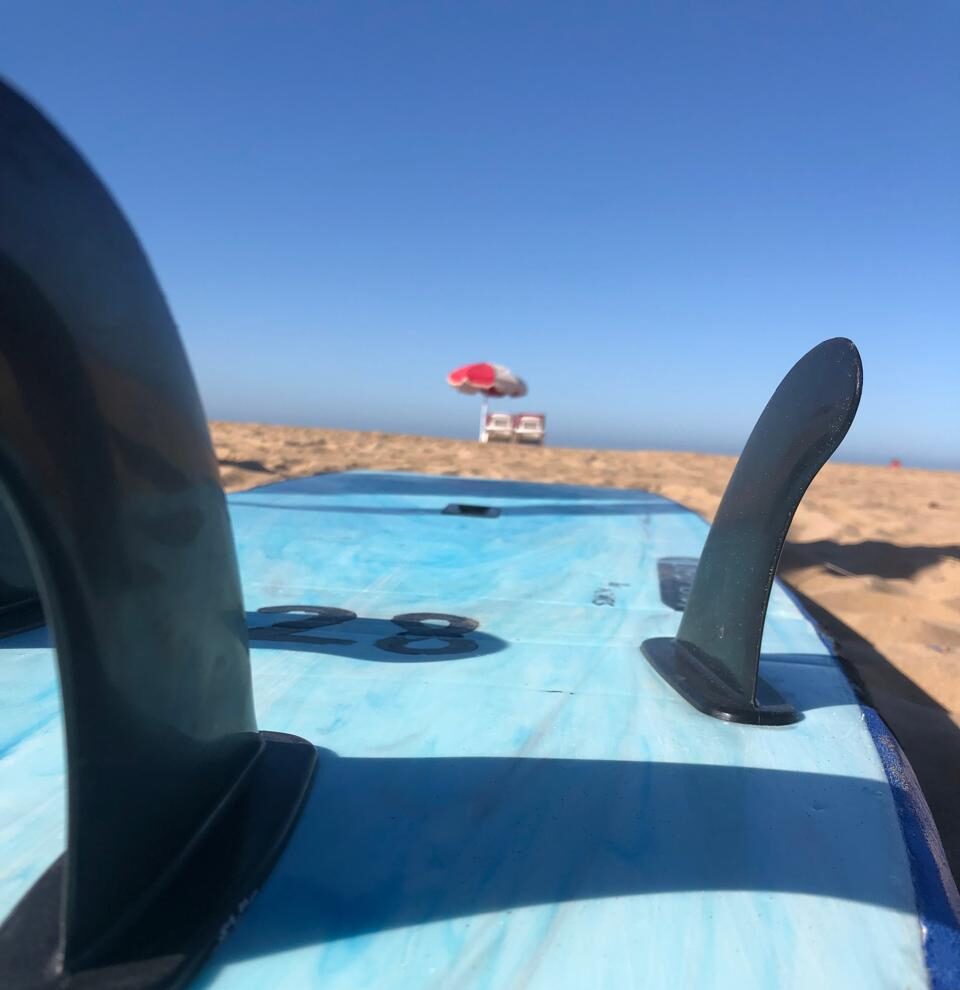
After gearing up, we drove along the coast, checking different surf spots to see where the best waves were rolling in. Panorama Beach was the winner of the day. Once we arrived, we unpacked our boards and gear, settled on the sand, and began getting ready for the session ahead.
The Warm-Up & First Time Surfing Lesson
Before diving into the waves, we started with a quick jog along the beach to get our bodies moving, followed by dynamic stretching to loosen up and avoid injuries. This was especially important, as surfing demands flexibility and core strength.
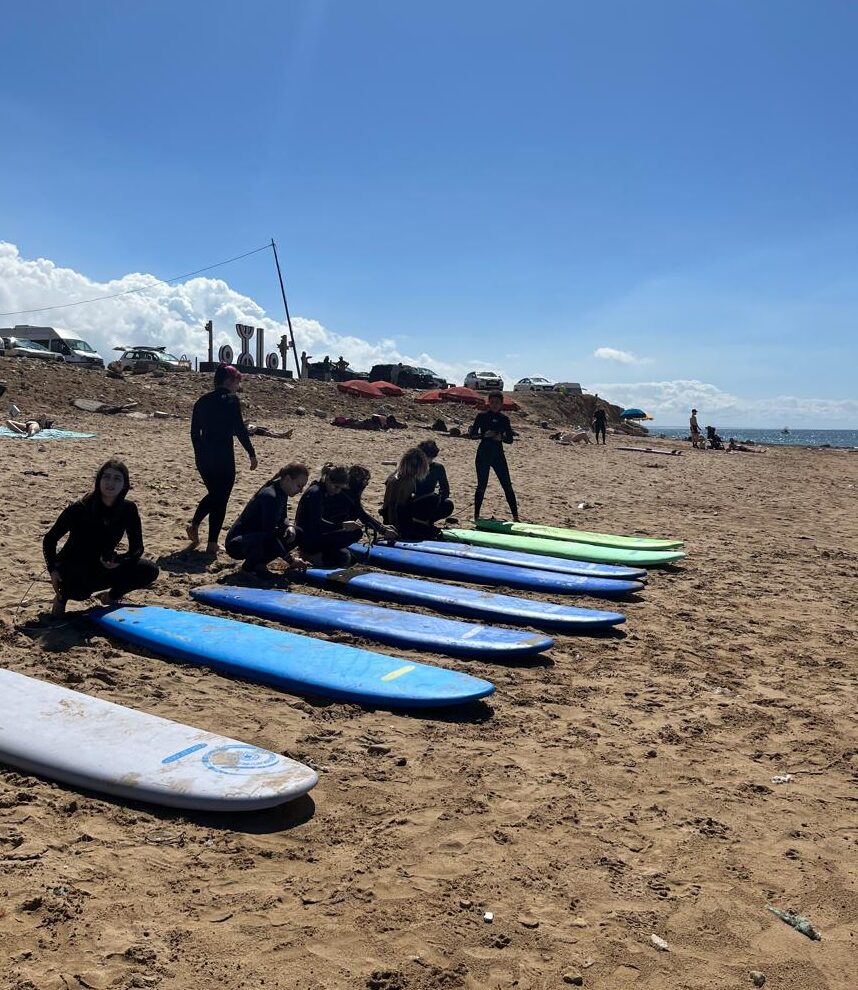
Next came the surf lesson, led by our experienced instructors. They walked us through the foundational techniques:
- How to properly lay on the board to maintain balance.
- The correct paddling motion to generate enough speed.
- How to spot the right waves to catch.
- The pop-up technique to go from lying down to standing up.
- Basic safety rules, including how to handle wipeouts.
On the beach, the pop-up seemed simple enough: paddle hard, place your hands on the board, push up into a pike position, slide your back foot first, then place your front foot where your hands were. Easy, right?
That’s what I thought—until I got into the water.
Hitting the Water: A Chilly Welcome
The sun was shining, but the water was cold—a reality check that I hadn’t fully prepared for. Wetsuits were a must, and even then, stepping into the water was a bit uncomfortable. But there was no turning back.
From the shore, surfing looks simple. You paddle, pop up, and ride the wave, right? Wrong.
As soon as I waded deeper into the water, the first real challenge presented itself: getting past the whitewash. Even the small, broken waves held enough power to knock me off balance. Every time I tried to paddle forward, another wave came crashing in, pushing me back toward the shore. It was frustrating but also exhilarating—a true test of persistence. The key is to keep going.
The Paddling Struggle
Once I finally managed to get past the relentless whitewash, I focused on paddling further out, where the waves were breaking.
Paddling is exhausting.
It requires upper body strength and proper technique. My arms grew tired as I fought against the waves, and I struggled to maintain my balance on the board. Sometimes, I’d mistime my paddling and get hit square in the face by an incoming wave. Other times, I’d slip off my board entirely.
But every beginner struggles. And struggling is part of the learning process.
The Moment of Truth: First Time Surfing
Finally, I made it to the lineup, where I sat on my board, catching my breath and observing the waves. My instructor guided me on when to start paddling and which waves to chase.
“Go, go, go! Paddle paddle!” I heard him shout as I turned my board toward the shore and paddled with all my might.
The wave picked me up, and for a split second, everything felt weightless. I quickly placed my hands on the board, attempted the pop-up—and immediately wiped out.
I tumbled underwater, feeling the raw power of the wave as it tossed me around like a ragdoll. When I surfaced, I gasped for air, spit out a mouthful of saltwater, and climbed back onto my board, ready to try again.
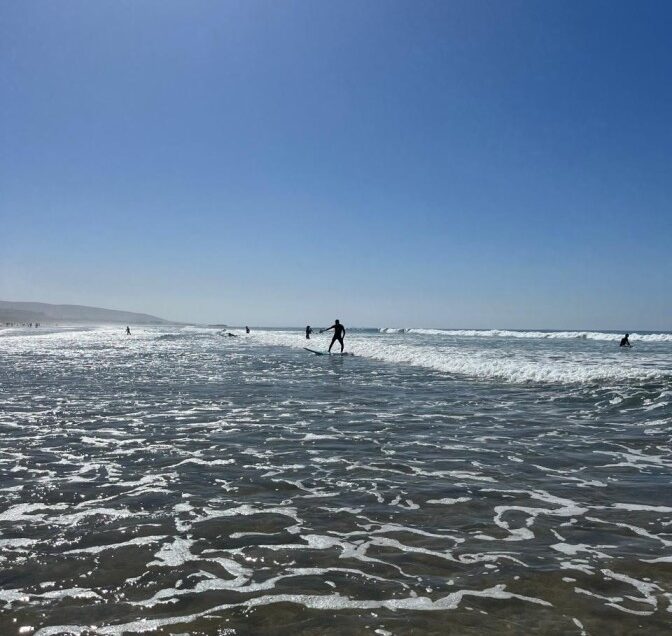
The Thrill of Standing Up
It took several failed attempts before I finally did it.
I paddled hard, felt the wave lift my board, and this time, I pushed up smoothly. My back foot found its place, followed by my front foot. I bent my knees, kept my eyes on the shore, and suddenly—I was surfing.
For a few glorious seconds, I felt weightless, gliding effortlessly on the wave. It was a mix of flying and floating, an electrifying feeling that wiped away all the exhaustion and frustration from earlier.
And just as quickly as it started, I lost my balance and fell. But it didn’t matter. I had stood up. I had surfed.
The Aftermath: A Newfound Respect for Surfing
By the end of the session, I was drained. My shoulders burned, and I had probably swallowed half the ocean. But I was also hooked.
Surfing is not just about catching waves—it’s about patience, resilience, and being in sync with the ocean. The sport demands upper body strength for paddling, core stability for balance, and mental focus to read the waves. It’s a workout, a meditation, and a thrill ride all in one.
Why You Should Try Surfing in Morocco
For anyone thinking about learning to surf, Morocco is the place to do it. With its year-round waves, warm hospitality, and diverse surf spots, it’s an unbeatable destination for both beginners and advanced surfers.
If you’re looking for an authentic surf experience, check out Original Surf Morocco’s surf packages. Whether you’re a first-timer or a seasoned rider, our experienced instructors will guide you to the best waves, help you improve your skills, and ensure you have an unforgettable time.
Final Thoughts on First Time Surfing
Looking back, my first time surfing was a mix of wiping out, struggling, learning, and triumphing. It was frustrating at times, but it was also one of the most rewarding experiences I’ve ever had.
So if you’ve ever thought about trying surfing, don’t overthink it—just go for it. You’ll wipe out, you’ll struggle, but in the end, you’ll also fall in love with the waves.
See you in the water! 🌊🤙
ChatGPT said: