
How to Read Surf Conditions for Beginners
Introduction
Reading surf conditions for beginners can feel confusing when you first start surfing. You open a surf forecast app and suddenly see words like swell, offshore wind, tide, and wave period everywhere.
For beginners, it can look more like a weather report than something connected to surfing.
But understanding surf conditions is one of the most important skills you can learn as a surfer.
Good surf conditions can make your session fun, safe, and easier to progress, while poor conditions can turn even small waves into a difficult experience.
The good news is that you do not need to become a surf expert overnight. Once you understand the basics, checking surf conditions becomes much easier and even exciting before every surf session.
In this beginner-friendly guide, we’ll explain how to read surf conditions step by step, including swell, wind, tides, and wave forecasts.
Whether you’re planning your first surf lesson or preparing for a surf holiday in Morocco, this guide will help you understand what to look for before paddling out.
👉Get today’s surf conditions & secure your surf lesson or surf package on WhatsApp
1. What Are Surf Conditions for Beginners?
1-1 Why Surf Conditions Matter
Surf conditions are the combination of ocean and weather factors that affect wave quality and safety.
These conditions change every day and even throughout the day, which is why surfers constantly check forecasts before going into the water.
Even the same beach can feel completely different depending on the conditions. One morning, the waves may be small, clean, and perfect for beginners.
Later in the day, stronger winds or changing tides can create rough, difficult waves.
Understanding surf conditions helps beginners:
- Choose safer waves
- Improve faster
- Avoid frustrating sessions
- Build confidence in the ocean
- Know the best time to surf
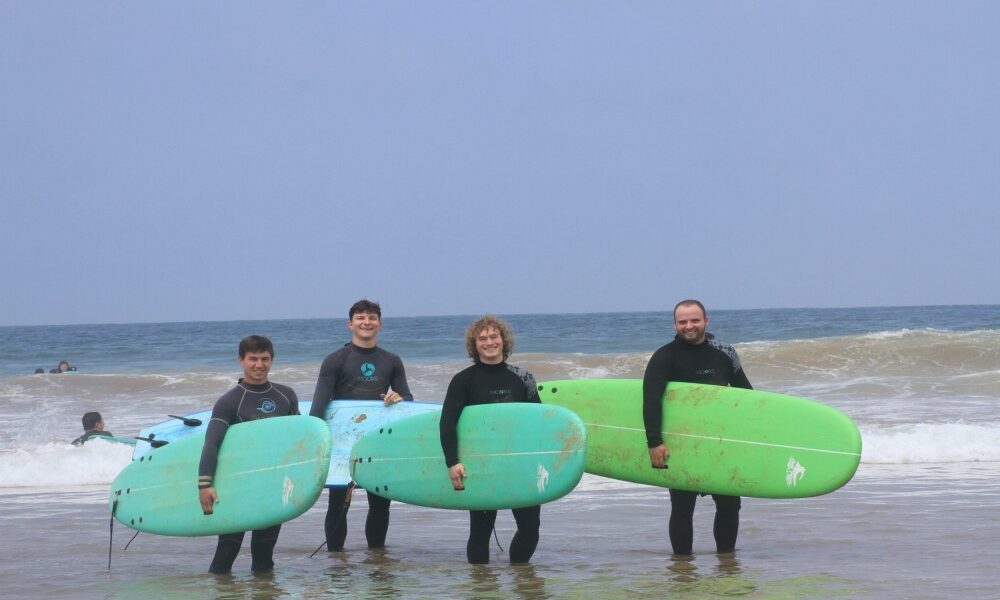
This is also why surf schools and experienced instructors carefully choose surf spots depending on daily conditions. At Original Surf Morocco, for example, instructors check conditions every day to find the best waves for each surf level.
1-2 The Main Things Beginners Check in Surf Conditions
When surfers check a surf forecast, there are a few main things they focus on. These factors work together to create the waves you see in the ocean.
The most important surf conditions include:
- Swell
- Wave height
- Wave period
- Wind direction
- Tides
Each of these elements affects how waves break and how easy they are to surf. Small changes in wind or tide can completely change the quality of a surf session.
For beginners, this might sound technical at first, but learning the basics is much simpler than it seems.
Once you understand what each factor means, you’ll start recognizing which conditions are best for your level.
In the next sections, we’ll break down each surf condition one step at a time so, you can learn how to read surf forecasts with confidence.
👉Check today’s surf conditions & book your surf lesson or surf package via WhatsApp
2. Understanding Swell for Beginners
2-1 What Is a Swell?
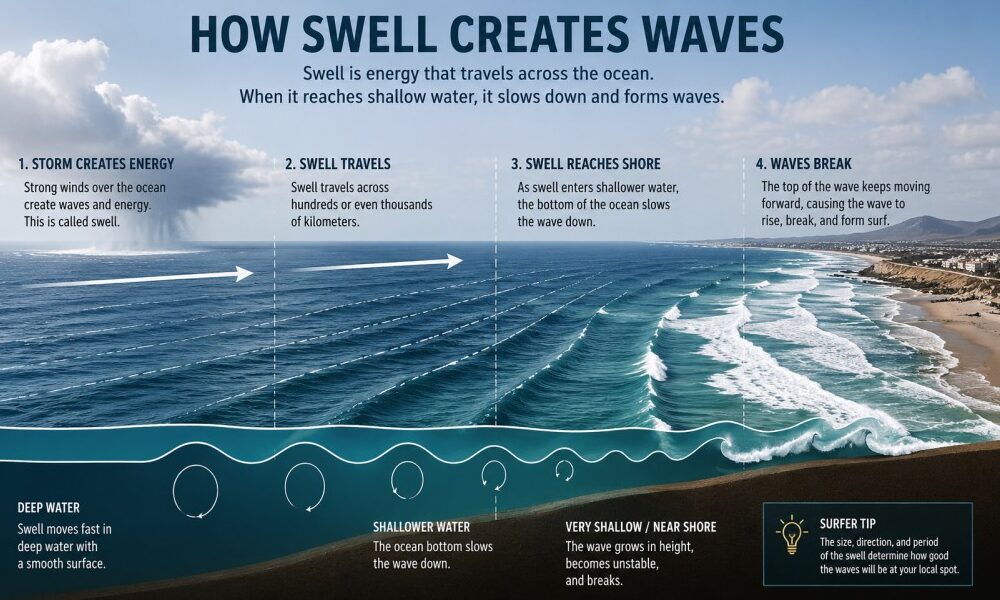
Swell is the energy that travels across the ocean and creates waves when it reaches the coastline. Most swells are created by storms and strong winds far out at sea.
As this energy moves through the water, it eventually reaches beaches and reef breaks, forming surfable waves.
This is why waves can still exist even when the weather at the beach looks calm and sunny. A storm happening hundreds or even thousands of kilometers away can generate swell that later arrives at your local surf spot.
For beginners, swell is one of the most important surf conditions to understand because it directly affects the size and power of the waves.
Bigger swells usually create larger and stronger waves, while smaller swells often produce softer and more beginner-friendly conditions.
Different coastlines react differently to swell. Some beaches need a large swell to work properly, while others can produce fun waves even with small swell conditions.
In Morocco, especially around Tamraght and Agadir, many beginner surf spots work well with medium swells, which is one reason the area is popular for surf lessons and beginner surf holidays.
2-2 Why Swell Matters for Surf Conditions for Beginners
Swell direction refers to the angle from which the swell approaches the coastline. This may sound complicated at first, but it simply means the direction the waves are traveling from before they hit the beach.
Not every surf spot works with every swell direction. Some beaches receive waves better from the northwest, while others work best with west or southwest swells. The shape of the coastline, rocks, and underwater sandbanks all influence how the waves break.
This is why one surf spot can have perfect waves while another nearby beach looks flat or messy on the same day.
For beginners, understanding swell direction is helpful because it explains why surfers often move between different surf spots depending on conditions. Experienced surf coaches usually check several beaches before choosing where to surf.
In the Agadir and Tamraght area, the variety of beaches allows surfers to find suitable conditions for different levels throughout the year. When one spot becomes too big or windy, another protected beach may offer softer and cleaner waves for beginners.
As you gain more surfing experience, you’ll start noticing how different swell directions affect your favorite surf spots and which conditions give you the best sessions.
3. Wave Height for Surf Beginners
3-1 What Wave Height Means
Wave height is one of the first things surfers look at when checking a surf forecast. It tells you how big the waves are expected to be. Most surf apps show wave height in meters or feet.
For beginners, wave height can sometimes be misleading because the numbers do not always tell the full story. A one-meter wave on one beach may feel soft and easy to surf, while the same size wave at another spot may feel much more powerful.
Wave size is also affected by other conditions like swell period, wind, and tide. This is why experienced surfers never look at wave height alone when checking forecasts.
As a beginner, it is important to avoid surfing waves that are too big for your level. Smaller waves usually provide a safer and more enjoyable environment for learning techniques like paddling, popping up, and turning.
Many beginner surfers think bigger waves automatically mean better surfing, but smaller clean waves are often the best conditions for progression.
3-2 Best Wave Size for Beginners
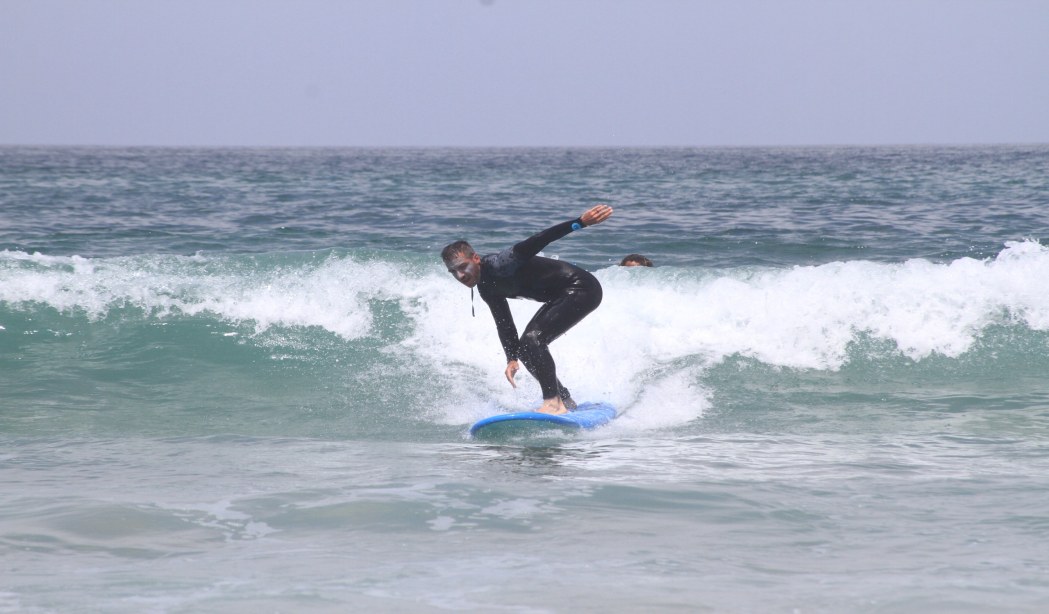
For most beginners, waves between waist-high and chest-high are ideal for learning. These waves are usually easier to paddle into and less intimidating in the water.
Small to medium-sized waves help beginners:
- Practice takeoffs more comfortably
- Improve balance
- Gain confidence
- Reduce fear in the ocean
- Surf longer without exhaustion
This is one reason why many people choose beginner-friendly surf destinations like Tamraght in Morocco. The area offers a variety of mellow beach breaks where beginners can learn safely under the right conditions.
At Original Surf Morocco, instructors carefully choose surf spots depending on wave size and each surfer’s level. This helps beginners avoid difficult conditions and enjoy more successful surf sessions.
4. Understanding Wave Period
4-1 What Is Wave Period?
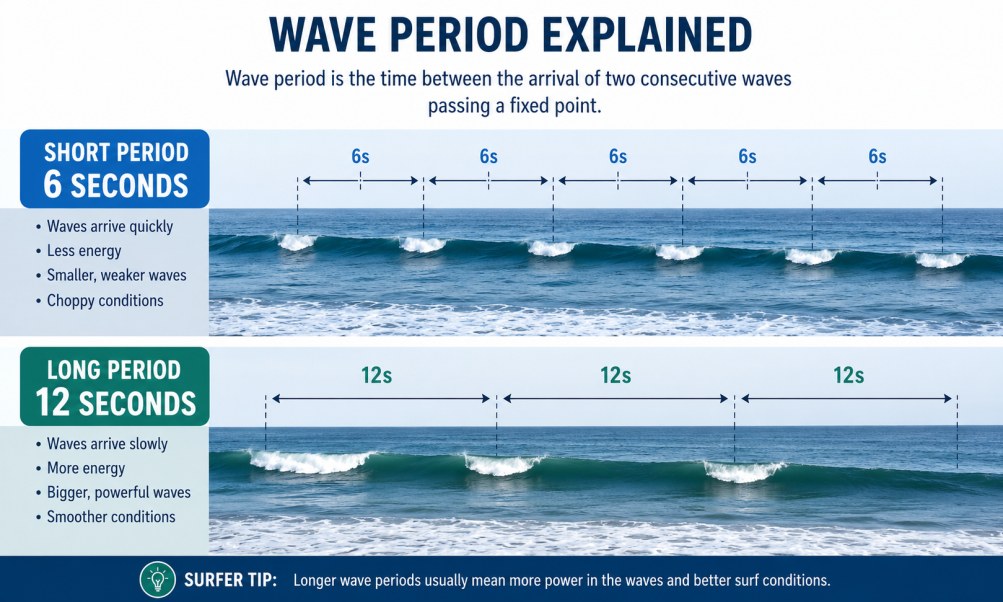
Wave period refers to the time between waves passing a fixed point in the ocean. It is measured in seconds and is usually shown on surf forecast apps next to the swell information.
For example:
- 6-second period = waves arrive every 6 seconds
- 12-second period = waves arrive every 12 seconds
At first, wave period may not seem very important, but it actually tells surfers a lot about the power and quality of the waves.
A short wave period usually means weaker and less organized waves. A longer wave period often creates cleaner, stronger, and more powerful surf.
4-2 Why Longer Period Creates Stronger Waves
When waves travel across the ocean for a longer time, they collect more energy. This creates waves that are more powerful when they finally break near the shore.
For example:
- 5–7 seconds usually means weak and messy waves
- 8–11 seconds can produce fun beginner conditions
- 12+ seconds often creates stronger and more advanced surf
This is why two days with the same wave height can feel completely different in the water.
A one-meter swell with a 6-second period may feel soft and weak, while a one-meter swell with a 14-second period can feel much stronger and heavier.
For beginners, medium wave periods combined with smaller wave sizes usually create the most comfortable learning conditions.
5. Wind Direction Explained
5-1 Offshore vs Onshore Wind
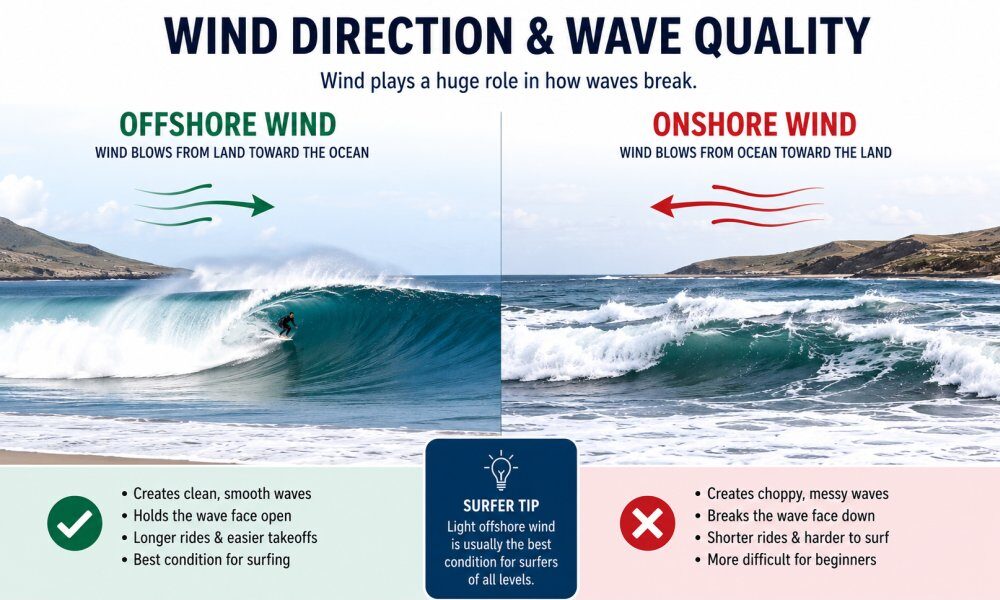
Wind plays a huge role in the quality of the waves. Even good swell can become difficult to surf if the wind conditions are poor.
There are two main types of wind surfers talk about:
5-2 Offshore Wind
Offshore wind blows from the land toward the ocean. This helps hold the wave up before it breaks, creating cleaner and smoother waves.
Offshore wind is usually considered the best condition for surfing because it creates:
- Leaner wave faces
- Longer rides
- Easier takeoffs
- Better wave shape
5-3 Onshore Wind
Onshore wind blows from the ocean toward the beach. This often creates choppy, messy, and less organized waves.
Strong onshore wind can make surfing much harder for beginners because the waves become unpredictable and more difficult to paddle into.
5-4 Best Wind Conditions for Beginner Surfing
Light wind or gentle offshore wind is usually best for beginners. Clean waves make it easier to practice popping up, balancing, and catching waves.
This is why many surf schools prefer early morning surf sessions. Wind is often lighter in the morning, creating smoother conditions before stronger afternoon winds arrive.
In Morocco, morning surf sessions around Tamraght and Agadir are often ideal for beginner surfers because conditions tend to be cleaner and more manageable.
Learning how wind affects waves will help you choose better times to surf and avoid frustrating sessions.
6. Understanding Tides Surf Conditions For Beginners
6-1 High Tide vs Low Tide
Tides are the movement of the ocean caused by the gravitational pull of the moon and sun. Most beaches experience changing tides throughout the day.
The two main tides surfers check are:
- High tide
- Low tide
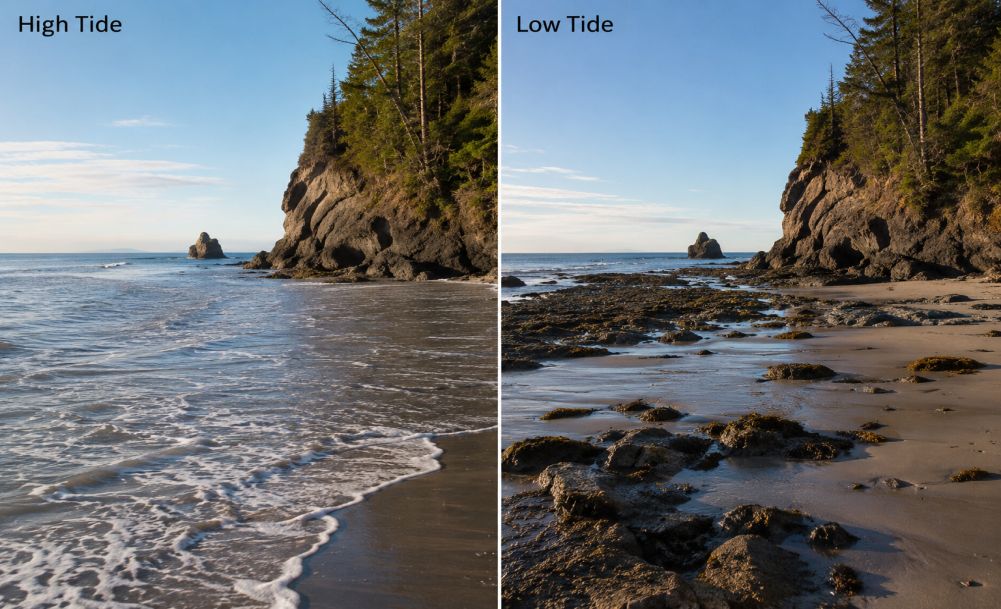
At high tide, the water level rises higher on the beach. At low tide, the water level drops lower.
Tides can completely change how waves break. Some surf spots become soft and slow during high tide, while others become faster and more powerful during low tide.
6-2 Why Every Surf Spot Reacts Differently
Every surf spot reacts differently to tides because of the shape of the ocean floor and coastline.
Some beaches work best:
- At mid tide
- Only during low tide
- Only during high tide
This is one reason local surf knowledge is so valuable. Experienced instructors and local surfers understand which conditions work best for each surf spot.
In areas like Tamraght, surfers often move between beaches depending on the tide and swell conditions to find the best waves during the day.
For beginners, surfing with local guidance can make a huge difference because instructors choose safer and more suitable conditions for learning.
7. Best Surf Conditions for Beginners
7-1 Ideal Beginner Surf Conditions
The best surf conditions for beginners are usually:
- Small to medium waves
- Gentle offshore wind
- Medium tide
- Sandy beach breaks
- Consistent but soft waves
These conditions help beginners practice safely while building confidence in the water.
Beach breaks are often recommended for beginners because they usually have softer waves and sandy bottoms instead of rocks or reefs.
Morocco is popular for beginner surf holidays because many beaches around Agadir and Tamraght offer these types of conditions throughout the year.
7-2 Common Beginner Mistakes
One of the most common beginner mistakes is only checking wave height while ignoring other conditions like wind or wave period.
Another mistake is surfing waves that are too large too early. Bigger waves may look exciting, but they can slow progression and reduce confidence if conditions become overwhelming.
Beginners also often underestimate how quickly surf conditions can change throughout the day. Wind, tides, and swell direction can all affect wave quality within a few hours.
Learning to check all parts of a surf forecast together will help you choose better surf sessions and improve faster over time.
8. Apps and Websites to Check Surf Conditions for Beginners
8-1 Best Surf Forecast Apps
Surf forecast tools like Surfline help surfers check waves, wind, and tides before heading to the beach.
Some of the most popular surf forecast platforms include:
- Surfline
- Windy
- Surf Forecast
- Magicseaweed alternatives
These apps provide information about:
- Wave height
- Swell direction
- Wave period
- Wind conditions
- Tides
As a beginner, it may feel overwhelming at first, but over time you’ll start recognizing which conditions work best for your surfing level.
8-2 How We Check Conditions at Original Surf Morocco
At Original Surf Morocco, checking surf conditions is part of the daily routine before every surf session.
Our instructors analyse:
- Swell size
- Wind direction
- Tides
- Crowd levels
- Beginner-friendly conditions
Because the coastline around Tamraght offers several surf spots close to each other, we can choose the best beach depending on the day’s conditions and the level of the group.
This helps beginners enjoy safer and more comfortable surf sessions while progressing faster in the water.
9. Surf Conditions in Morocco for Beginners
9-1 Why Tamraght Is Great for Learning

Tamraght has become one of the most popular beginner surf destinations in Morocco thanks to its variety of surf spots and consistent waves.
The region offers:
- Mellow beach breaks
- Sunny weather
- Warm surf culture
- Year-round surfing
- Beginner-friendly conditions
Unlike some destinations where conditions can become too heavy for beginners, the Agadir, Taghazout, and Tamraght area usually offers multiple options for different levels.
This flexibility makes it easier for surf schools to find suitable waves for learning.
🏄♂️Book your surf lesson or surf package now via WhatsApp
9-2 Best Season for Beginner Surfing in Morocco
Morocco offers surfable waves throughout the year, but each season brings slightly different conditions.
For beginners:
- Spring and autumn often provide balanced conditions
- Summer usually offers smaller and softer waves
- Winter brings more consistent swell but can sometimes become larger
Many beginners enjoy learning during the warmer months when the ocean feels more relaxed and conditions are softer.
However, with the right coaching and spot selection, beginners can enjoy surfing in Morocco during almost any season.
Conclusion
Surf Forecasts Get Easier With Time
Learning how to read surf conditions may feel complicated at first, but it becomes much easier with practice. Over time, you’ll start recognizing which conditions create fun and manageable waves for your level.
Understanding swell, wind, tides, and wave period will help you:
- Choose better surf sessions
- Stay safer in the ocean
- Progress faster
- Enjoy surfing more confidently
Even experienced surfers continue checking forecasts every day because surf conditions are always changing.
Learn Surf Conditions With Original Surf Morocco
The best way to understand surf conditions is by spending time in the ocean with experienced surfers and instructors.
At Original Surf Morocco, we help beginners not only learn how to surf but also understand the ocean and daily surf conditions with confidence.
Whether you’re joining your first surf lesson or planning a full surf holiday in Tamraght, our team chooses the best beginner-friendly conditions each day so you can enjoy safe, fun, and unforgettable surf sessions in Morocco.