
The Ultimate Guide to Anchor Point
They say if you have been in Morocco without surfing Anchor Point then you haven’t truly surfed Morocco yet. In this guide we will take you through a surf at the legendary right hander from how to get there, entry & exit points, conditions, and other helpful tips from our years of navigating the increasing popular & famous Anchor Point.
Anchor Point is called Almadraba by the locals. It is an Arabic epithet that signifies a good place to strike, and is also an old age technique for catching Atlantic Bluefin Tuna. At the spot, you can see a wall about 100 meters towards Taghazout from the tip of the rocks that used to be part of a tuna factory. The area around Anchor Point now has several accommodations and takeaway restaurants.
Logistics:
Anchor Point is 25 km from Agadir city 10 km from Tamraght (A 10 minute drive from Original Surf Morocco). It’s on the left side as you depart Taghazout en route to Essaouira on national Road N° 1. There is a large car park at Anchor Point where vendors are selling tea and coffee for a last minute caffeine jolt before the wave of your life. Original Surf Morocco’s Surf Guiding packages include a pep talk and proper hype up en route to the spot with an experienced local guide before hopping into the water.
The Wave:
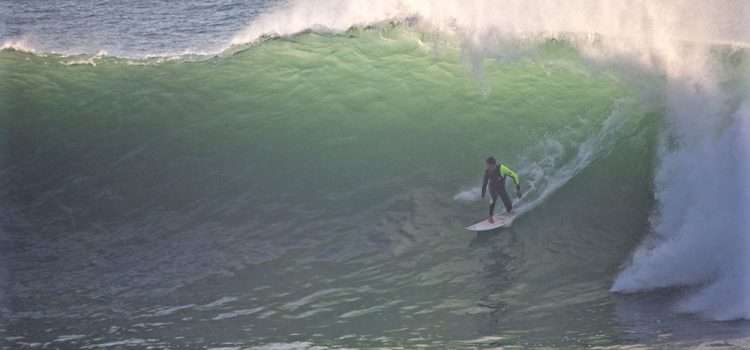
We consider one of the world’s best point breaks wave the best wave in Morocco, It’s a right hand point break that needs a large Northwest swell to work. It is optimal in low tide, but sometimes can also break at mid-tide with a big swell. It’s significantly more crowded when it’s small (3-5 ft) because it becomes more user-friendly. When it’s big (6ft+) the crowd spreads into three distinct lineups as the ride is long and has several peaks, where surfers can kick out and pass the torch to surfers down the line. The first line up is parallel with the rocks at the end of the point and are where the biggest waves are, the second is closer to Taghazout – though a bit of a paddle from the shore, the lineup closest to the shore and holds smaller waves that have passed the first section. The last section is naturally the smallest, and is closest to the beach as seen on the pictures below. Surfers that can manage to link all three sections together either have a long paddle (or jog!) back to the top while they can think about the longest, and raddest wave of their life

Anchor Point is rocky, and with spots like this that work best on low tide; we have seen many surfers struggle with safe entries and exits. The next section will talk about the easiest ways to make it in and out of the lineup at Anchor Point for minimal stress and maximum shred.
1st: To jump from the rocks
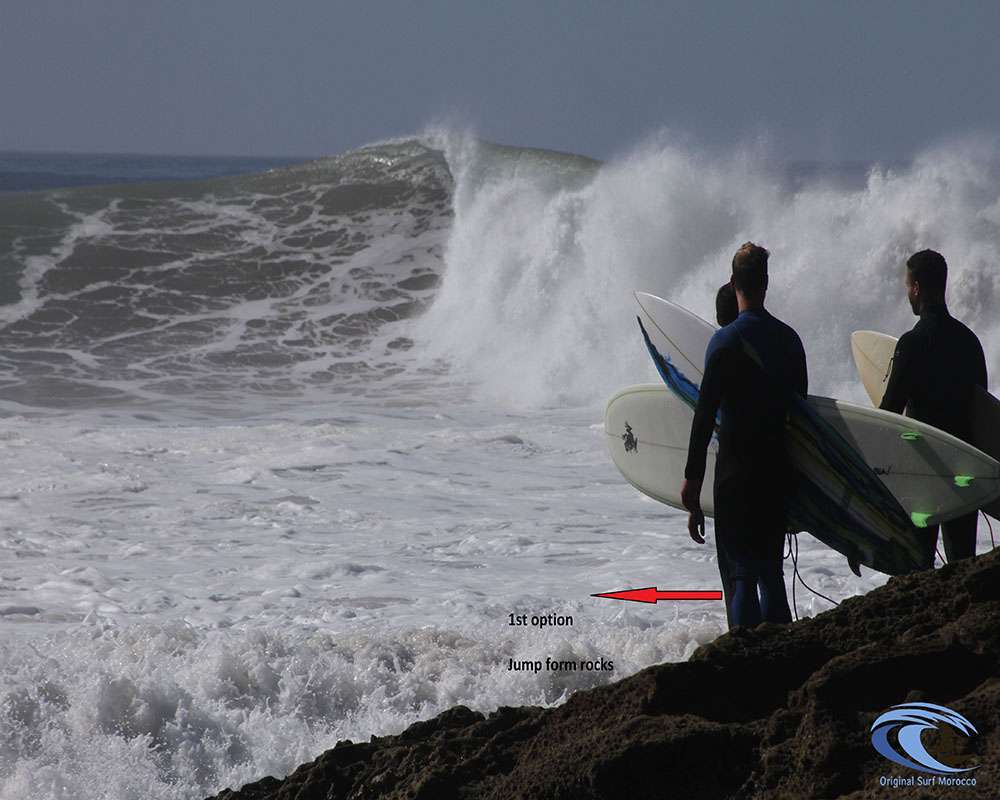
The easiest way to get into the lineup is to rock off. You must stand at the end of the rocky point, and wait until a set is almost through so there is a bit of foam to pad you and your board, but you will not take a full set on the head. You then jump onto your board and paddle as fast as you can straight (south towards Tamraght) in order to avoid the breaking waves and the current that may take you to the rocks. We have seen many surfers try to paddle through the inside (closest to the rocks) and end up with poor surfs from all the energy used duck diving through the whitewash, or worse: injuries from rocks and dinged boards.
Look at the photo which direction you need to paddle to avoid unnecessary effort.

2nd: Walk in from the sandy bead behind Anchor Point (see the photo, there are some rocks):
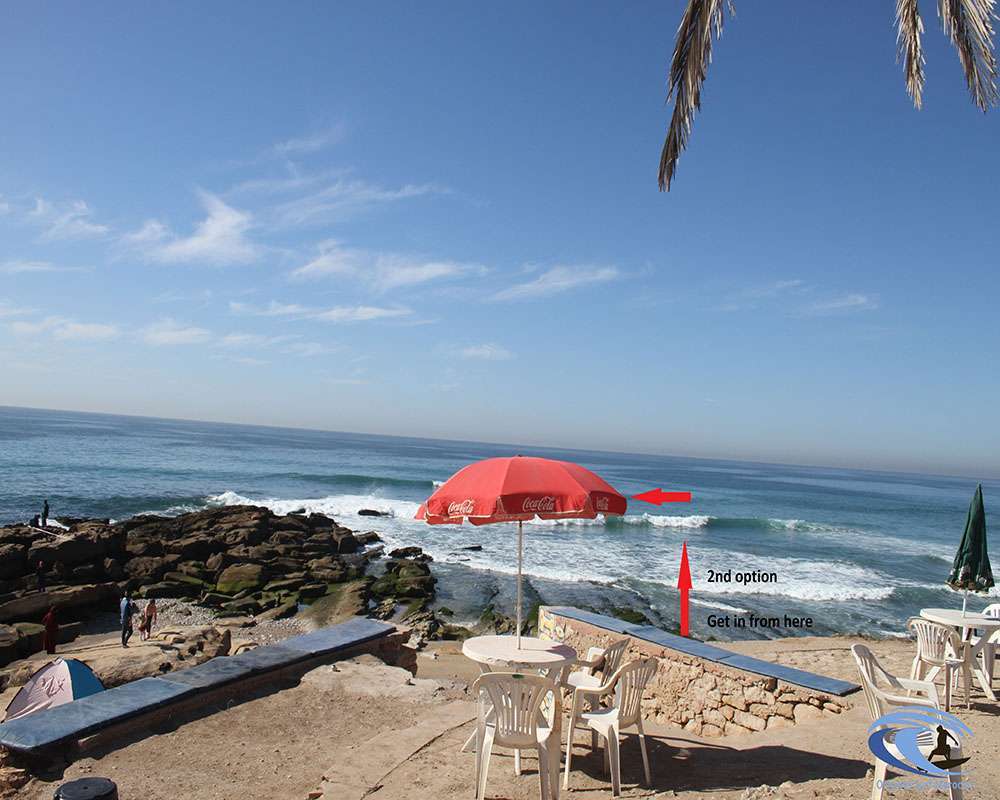
Jumping off rocks into heavy surf isn’t an easy experience for everyone. Plenty of surfers would prefer to paddle a bit longer in order to avoid rocking off. This is a long paddle (roughly 300 metres) and although there are channels that can be used to help you into the lineup, you will still need to duck dive oncoming sets. Since Anchor Point is a spot that only works with bigger swell, the waves that will be coming in are large and will require a lot of energy to get through. While this option may seem like a safe play, the majority of surfers that enter from the beach use most of their energy paddling instead of surfing. We recommend that if you’re not comfortable jumping off the rocks that you practice rocking off with our surf guides at a more mellow spot like Devil Rocks before making your pilgrimage to Anchor Point.
The Lineup:
Finally, you’ve navigated the rocks, or paddled your way to the lineup. Time to paddle onto the first wave you see, right? Wrong! While Anchor Point is a spot popular amongst tourists, and Moroccan surfers do not play the whole localism game, there is still protocol to follow so that everyone has a good surf and catches plenty of waves while staying safe. Respect is the name of the game when it comes to surfing at places like Anchor Point. A point break is different from a beach break in which the lineup really means surfers must queue up for their spot to paddle on a wave. Priority is given to the surfer at the top of the lineup closest to the peak. If they miss the wave that they paddle on, other surfers down the line can try to hop on. Surfers will rotate to the top of the point so that everyone has a chance for the wave of their life.
Anchor Point only breaks one way: right. That being said, you will never have to worry about dropping in on someone coming from your right side as you’re paddling, only down the line on your left. When paddling for a wave, you must look to your left to make sure that someone else isn’t already speeding down the wall. Dropping in on someone at a spot like Anchor Point could mean serious injury for both surfers given the steepness of the wall and speed that the original surfer will have at the time of collision. If you are coming down the line and see someone about to drop on you, yell something to get their attention repeatedly like “yo”, “yup”, or “no”. This will signify that you are on the wave and they should put on the breaks. If they don’t hear and continue to drop on you, look to kick out over the wall and back to the line up. Dropping in on someone is an awful feeling, your negligence could have caused an accident or ruined someones wave. The best way to move on from this is to be an adult, apologize and move on. It was an honest mistake, and hopefully a learning experience that didn’t create a bad situation – not the end of the world. Accepting responsibility for your actions is crucial in everything in life, surfing is no different.
The wave itself at Anchor Point is one of the heaviest in the area. Since it needs so much swell to break and only works at low tide there is a tremendous amount of water in the sets rolling in over a shallow rocky bottom. This creates a wide, fast wave with hundreds of cubic litres of water. Surfers must be prepared for long hold down times under the water if they catch waves on the head or fall off the lip while taking off.
Exiting Anchor Point is something that many surfers struggle with. This next section will talk about how to successfully exit after a legendary surf at Morocco’s finest point.
The first exit point is one that requires little paddling to reach. It is close to the lineup, but you need to be vigilant and have good timing so that you aren’t trying to get out when a set is coming. If your timing is wrong, the oncoming waves will smash you into the rocks – almost assuredly causing personal injury, a broken board, or both. We don’t recommend exiting via the rocks the same way you entered. There are two safer ways to exit below.

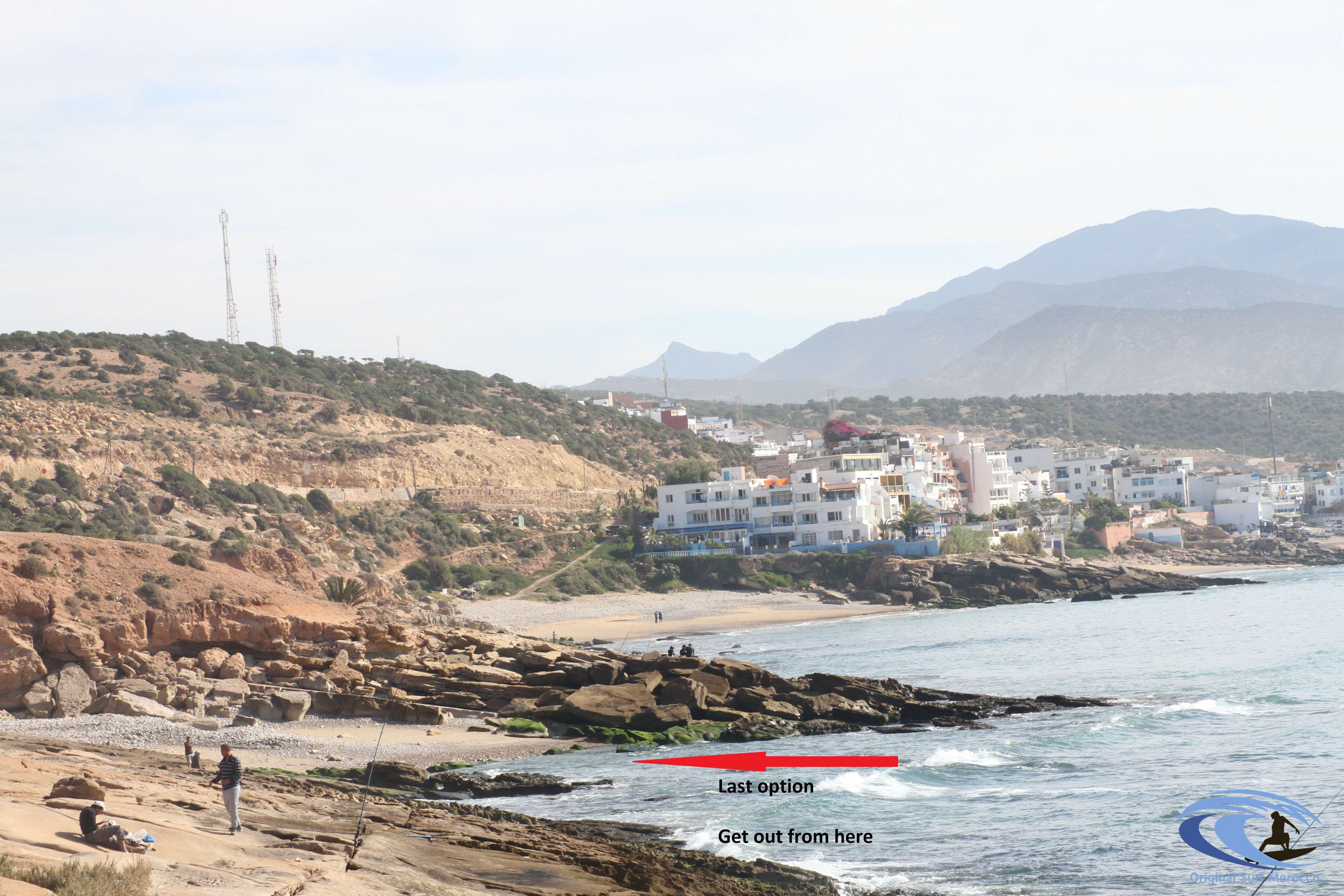
The 2nd option is to paddle beyond the rocks during a lull, and exit via the beach opposite Taghazout. This beach is called Mysteries, and it is a combination of sand and a few stones that have been blown in by recent storms. This is the easiest way to get out quickly without risking hitting the rocks that form Anchor Point.
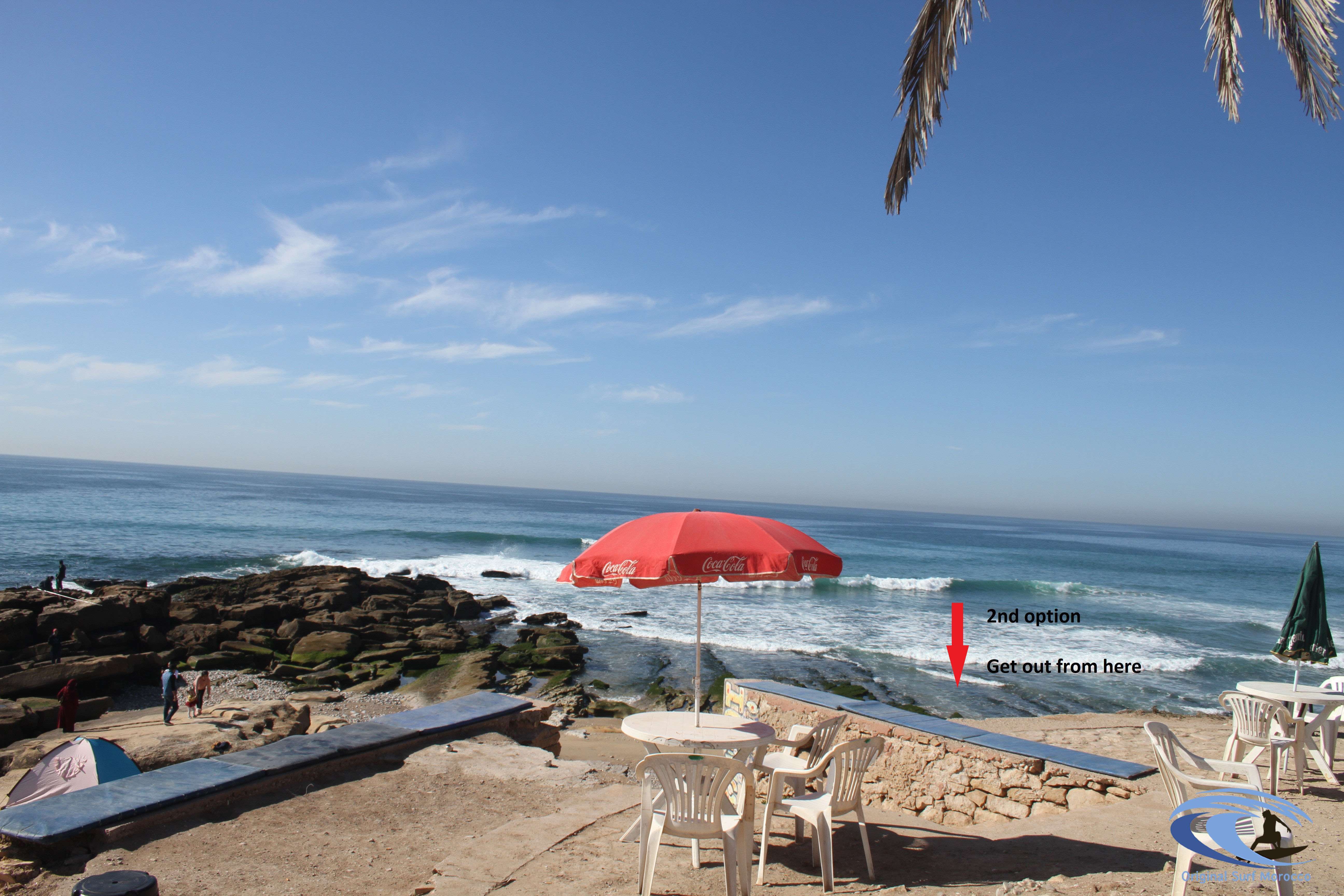
The last exit option a bit far from the peak, about 300 to 400 metres in a big swell. You will need to catch an exit wave when you’re ready to finish and ride it into Anchor Beach close to Taghazout. From there, you can walk out of the surf safely and back to the car park where we’ll bring you back to the house for tea and a chat about the session.
If you have any other questions about Anchor Point, or any of the world class breaks around Morocco, let us know in the comments below or shoot us an email! We are glad to share what we know about these spots, and take groups out for the waves of their lives. Please be advised, surfing at spots like Anchor Point takes a lot of practice and comfort in the ocean. It is not allowed for surf schools to take learners to Anchor Point, and we will never take surfers that are not fit for waves like this to heavy breaks like Anchor Point, period. Safety is our first concern, and if someone cannot hike a 100 metre hill we aren’t going to take them to Mount Everest. Surf with respect, a healthy mind & body, and awareness of the ocean and other surfers. Being mindful is one of the most important parts of surfing, and sometimes that mindfulness means surfing easier breaks until you are ready for a spot like Anchor Point.
Ready to surf it properly? Our Surf Guiding package pairs you with an experienced local guide who reads the conditions, times your entry and exit, and makes sure you’re taking on Anchor Point safely, not guessing. Get in touch and we’ll tell you honestly whether it’s the right call for your level.
FAQs
Is Anchor Point good for beginners?
No. Anchor Point is a powerful, heavy point break recommended for experienced surfers only. It’s not permitted for surf schools to bring learners here, beginners should master mellower spots like Devil’s Rock first.
How big are the waves at Anchor Point?
Anchor Point handles swells from 3ft up to 6ft+ before it gets genuinely serious. It’s more crowded and user-friendly when smaller (3-5ft) and splits into three distinct lineups when bigger.
What tide is best for Anchor Point?
Low tide is optimal, though it can also work at mid-tide with a big enough swell.
Where exactly is Anchor Point?
Anchor Point is about 25km from Agadir and 10km from Tamraght, on the road toward Essaouira, just past Taghazout.